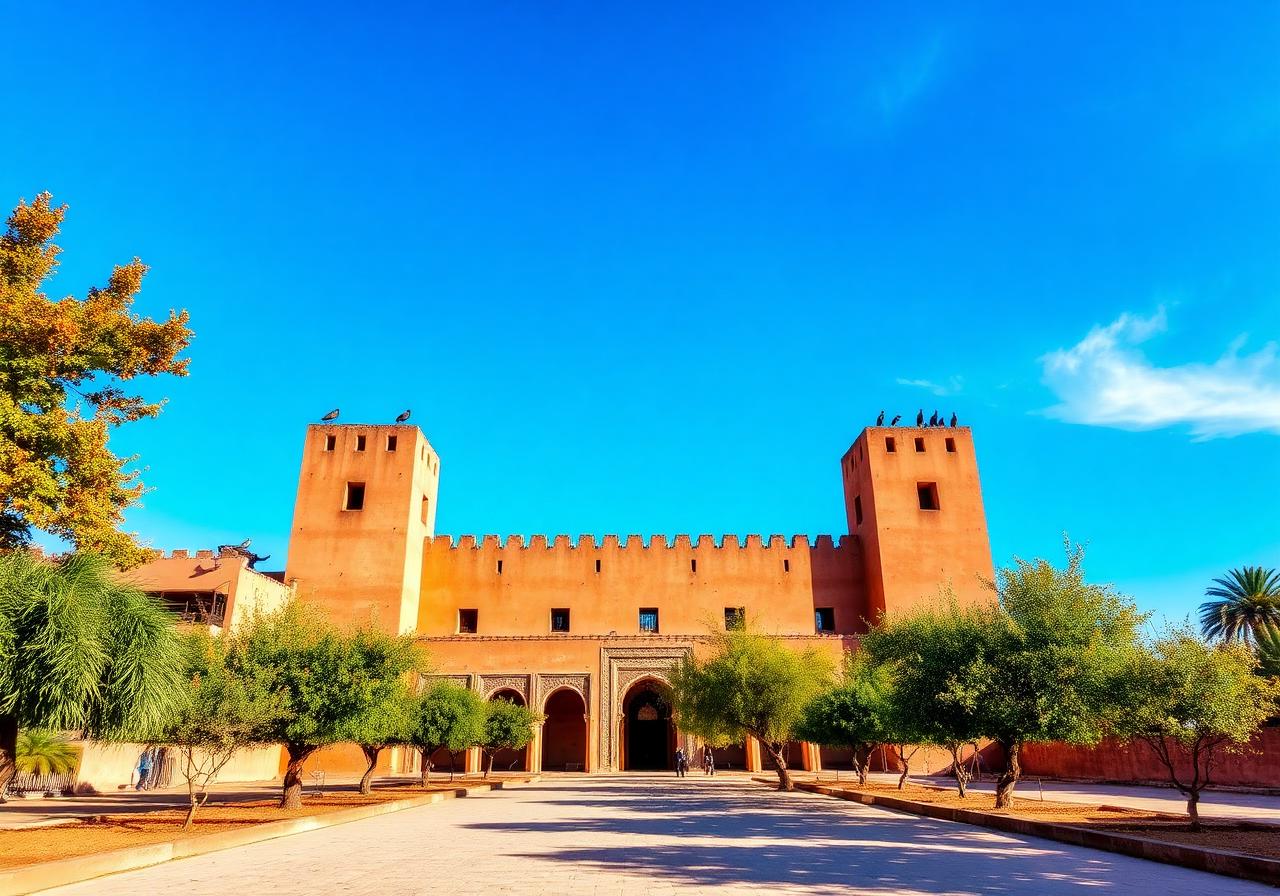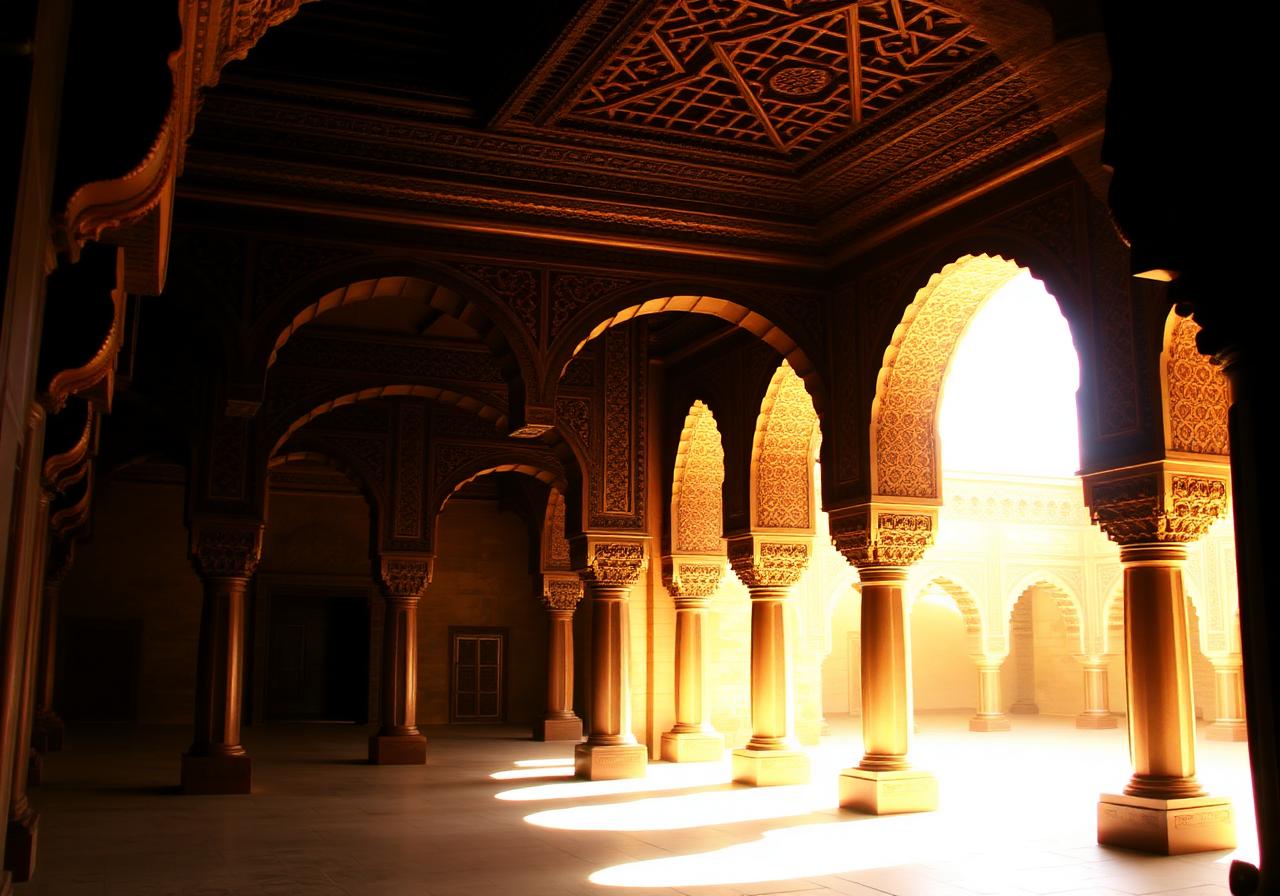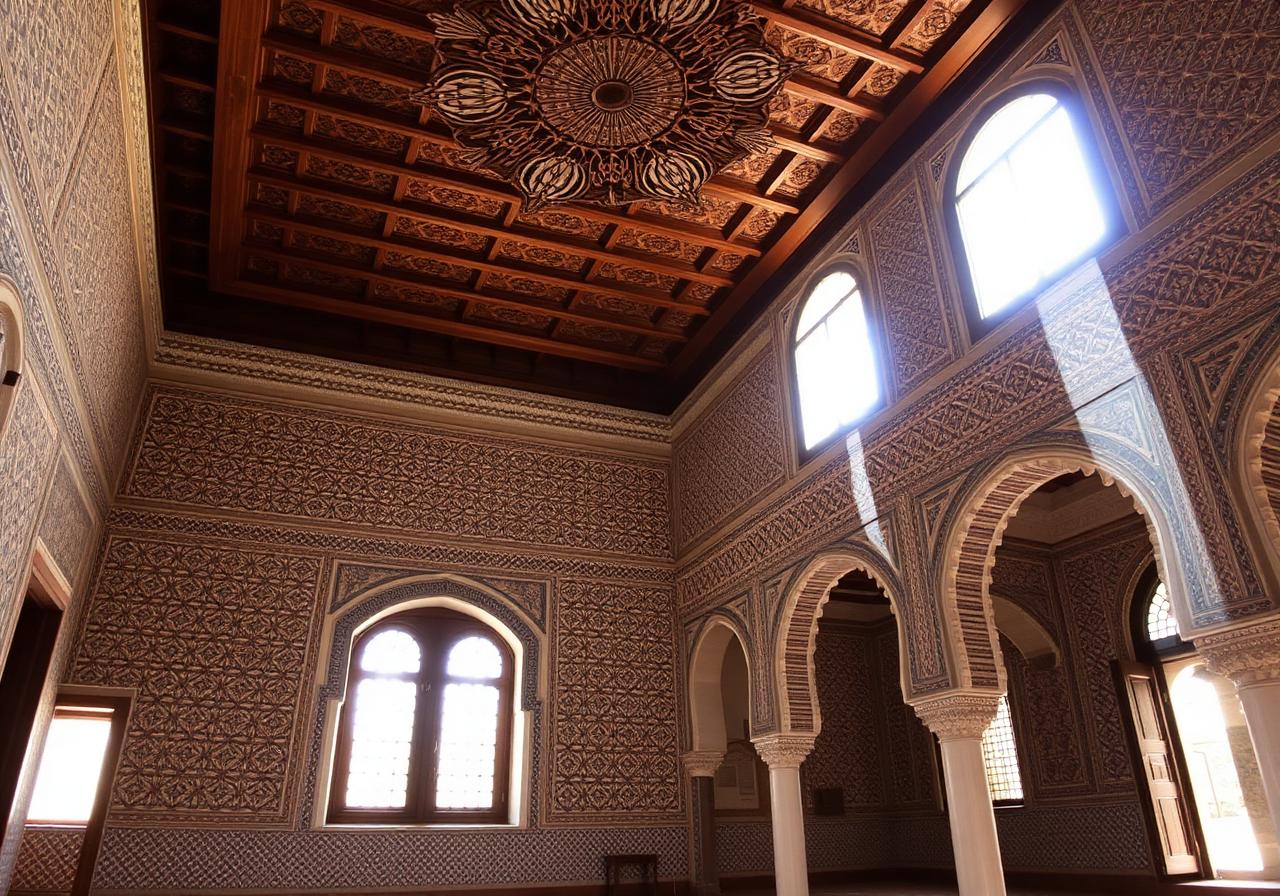
Bahia Palace is one of the large residences in the southern part of Marrakech's medina, known for its succession of courtyards, painted ceilings and carved cedar doors. The visit takes you through a series of interior spaces and gardens; there is no original furniture, but much of the architectural decoration remains.
This guide covers the historical background of the site, the spaces you pass through during a visit, a few decorative details worth noticing, and practical information on access, visit duration and the surrounding area. As with any Moroccan monument, opening hours and admission fees change over time, so it is worth checking the official source before you go.
A palace built for a powerful vizier
Bahia Palace was built in the late 19th century on the initiative of Si Moussa, and later extended by his son Ba Ahmed, grand vizier under Sultan Moulay Hassan I and regent during the minority of his successor. Its name, which evokes beauty or splendour, reflects the ambition behind the project: a residence to match the power of the man who commissioned it.
After Ba Ahmed's death, part of the furniture and valuable objects is said to have been dispersed, and the palace was later used for various official occasions, notably during the French protectorate. The exact dates for each phase of construction and occupation vary between sources, so for precise details it is best to cross-check with historical references or the monument's official source.
The spaces you visit
The route runs through several courtyards, including a large marble-paved courtyard surrounded by galleries, as well as reception rooms with painted ceilings and carved woodwork. It also passes through smaller apartments arranged around more intimate patios, giving a sense of how a large traditional Moroccan house was organised, with its reception areas and private quarters.
A planted garden, with its pathways and greenery, completes the visit and offers an open-air pause between covered rooms. The whole site is explored on foot, with no upper floor as such in the part open to the public, which makes moving from one room to another fairly straightforward.
Zellige, carved cedar and painted ceilings
- Zellige: ceramic mosaics with geometric patterns, visible on wall dados and some floors.
- Carved cedar wood: doors, lintels and cornices worked with floral and calligraphic motifs.
- Painted ceilings: colourful decoration based on plant motifs, especially elaborate in the reception rooms.
- Carved stucco: worked plaster frames and friezes, often paired with zellige and woodwork.
- Marble-paved courtyards, which contrast with the darker, more intimate rooms of the private apartments.
Details worth noticing
Moving through slowly, you notice that each reception room has its own colour scheme and painted ceiling pattern, with little strict repetition from one room to the next. The cedar doors, often left open, are worth a close look for their geometric cutwork and ironwork. In the main courtyard, the interplay between the pale marble floor and the shaded galleries creates interesting variations in light depending on the time of day.
Suggested visit duration
A visit at a normal pace, stopping to look at the decoration without lingering too long, usually takes between 45 minutes and an hour and a half. Visitors who want to photograph every room in detail or read fuller explanations can easily go beyond that. As the site is not very large, it can be combined within the same half-day with another visit in the southern medina.
How to get there
Bahia Palace is located in the southern part of the medina, a fairly long walk from Jemaa el-Fna through some of the lanes and squares in that area. From the Mellah, the former Jewish quarter, the distance is shorter, making it easy to combine both visits. A petit taxi remains a practical option if you prefer to avoid walking, particularly with children or in hot weather; it is worth checking beforehand whether the meter is used or agreeing on a price before setting off.
Avoiding the busiest times
Like many monuments in the medina, Bahia Palace tends to see more visitors in the late morning and early afternoon, particularly when several tour groups stop by on the same day. Arriving right at opening time or later in the day, within the hours in force, usually allows for a somewhat calmer look at the courtyards and reception rooms. As those hours need to be confirmed with the official source, it is worth checking them before planning your visit.
Accessibility
The visit takes place mostly at ground level, but the flooring includes door thresholds, changes in paving and occasionally uneven surfaces between courtyards and reception rooms. Closed, comfortable shoes make it easier to move between spaces. Visitors with reduced mobility or travelling with a pushchair may find some sections tricky, particularly around thresholds; it is advisable to ask on-site staff or check the official source for current access conditions.
Visiting with children
Children generally enjoy the maze-like feel of the palace, with its succession of courtyards and its planted garden where they can take a break. The visit remains mostly contemplative, though, with no specific interactive or explanatory features for younger visitors; it can help to prepare a few anecdotes about vizier Ba Ahmed or the decorative techniques used to keep their interest going. More ideas for family-friendly visits are gathered in the guide dedicated to visiting Marrakech with children.
Bahia or El Badi: what's the difference?
The two palaces are often confused by visitors, even though they follow very different logics. El Badi, the older of the two, was designed in the Saadian era as a palace of prestige on an impressive scale, and is now largely in ruins, with large open-air spaces and remaining walls. Bahia, built later, is a vizier's residence that has survived in much better condition, arranged around courtyards and richly decorated covered reception rooms.
In practice, Bahia gives a better sense of the interior decoration and atmosphere of a lived-in Moroccan residence, while El Badi lets you picture the monumental scale of a palace of power, especially from its terraces and sunken gardens. Many visitors combine the two, along with the nearby Saadian Tombs, for a morning devoted to heritage in the southern medina.
Common mistakes
- Confusing Bahia with El Badi when planning the trip and ending up at the wrong site.
- Expecting period furniture or rooms furnished like a classic museum.
- Arriving during the busiest hours without checking the official opening times beforehand.
- Underestimating the walk needed to reach the palace from Jemaa el-Fna and the heat in summer.
Practical tips
- Bring water and a hat, since part of the route there is done on foot outdoors.
- Dress respectfully, as in other heritage sites in the medina.
- Keep valuables close in crowded areas, as in any busy tourist site.
- Check opening hours and access conditions on an official source before setting off.
Around Bahia Palace
The Mellah, the medina's former Jewish quarter, is nearby and makes for a quiet stroll through its lanes. The Saadian Tombs and El Badi Palace are also within walking distance of Bahia, making it easy to link several heritage visits in the same outing. The southern medina, less dense with stalls than the central souks, also offers a different atmosphere for those wanting to step away from the bustle of Jemaa el-Fna for a while.
Frequently asked questions
How much time should I set aside to visit Bahia Palace?
Generally between 45 minutes and an hour and a half, depending on your pace and interest in decorative details.
What is the difference between Bahia Palace and El Badi Palace?
El Badi is an older Saadian palace, now largely in ruins and open to the sky, while Bahia is a later vizier's residence, better preserved, organised around richly decorated covered reception rooms.
Can you walk from Jemaa el-Fna to Bahia Palace?
Yes, it is possible, but the walk is fairly long through the southern medina; a petit taxi is an alternative if you would rather not walk, particularly in hot weather.
Is Bahia Palace accessible for visitors with reduced mobility?
The visit takes place at ground level, but thresholds and changes in paving may be difficult for some visitors; it is advisable to check on-site or with the official source for current conditions.
Do I need to book a ticket in advance?
Ticketing arrangements change from time to time; always check up-to-date information from the official source before your visit.
Is Bahia Palace suitable for a family visit?
Yes, children often enjoy the maze-like courtyards and the garden, although the visit remains mostly contemplative with no dedicated interactive features.
What else can I see near Bahia Palace?
The Mellah, the Saadian Tombs and El Badi Palace are all within walking distance, making it easy to plan a morning or afternoon devoted to heritage in the southern medina.
Read next
Sources and verification
Discover Marrakech is not an official site. Opening hours, prices, closures and access conditions should be checked with official sources before you travel. Recommendations reflect our own experience, separate from verifiable facts.
- UNESCO – Medina of Marrakesh
- Ministère de la Culture du Maroc
- Conseil régional du tourisme de Marrakech
- Office National Marocain du Tourisme
Last editorial review: August 2026
Estimated duration · About 75 seconds
I cannot confirm the exact price or opening hours here. Please check the official page or Google Maps before visiting.