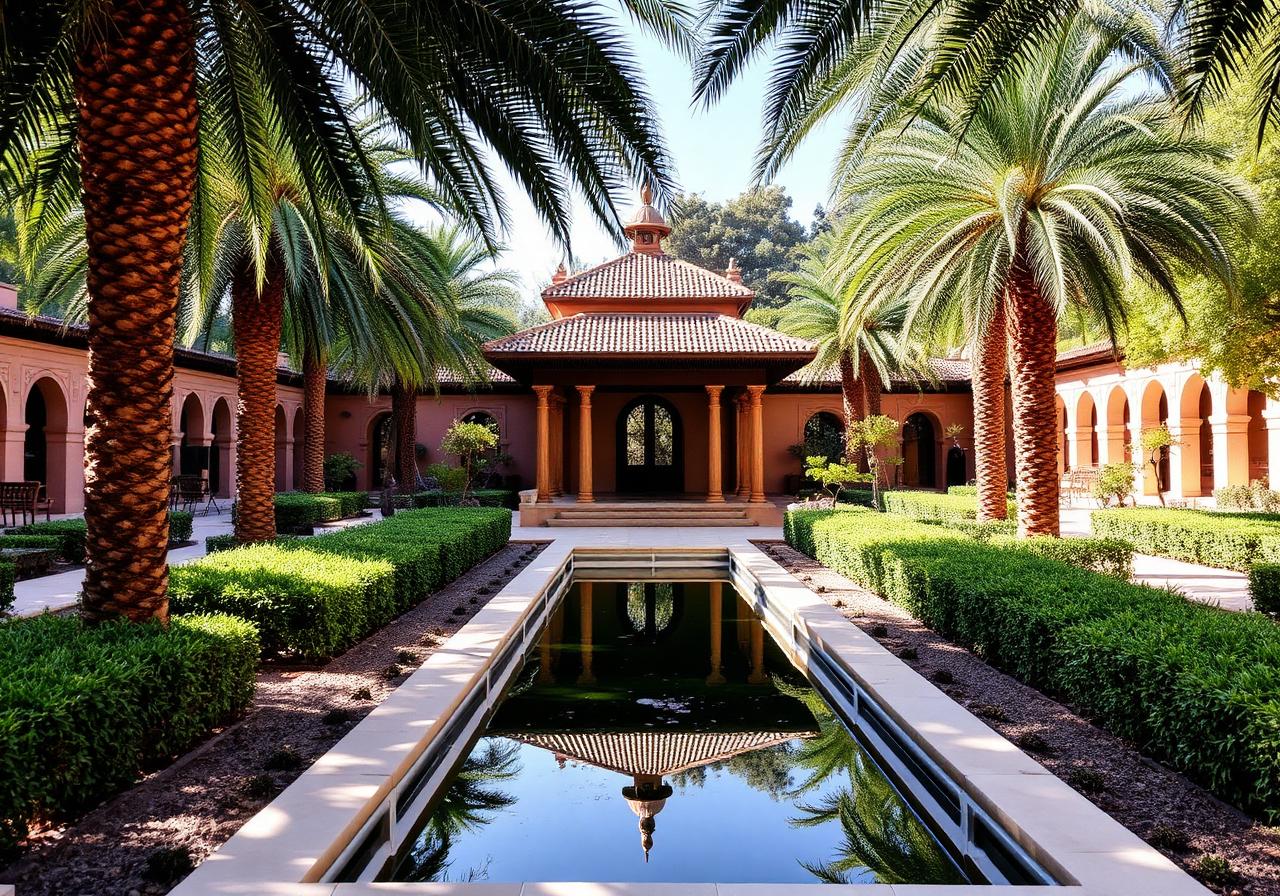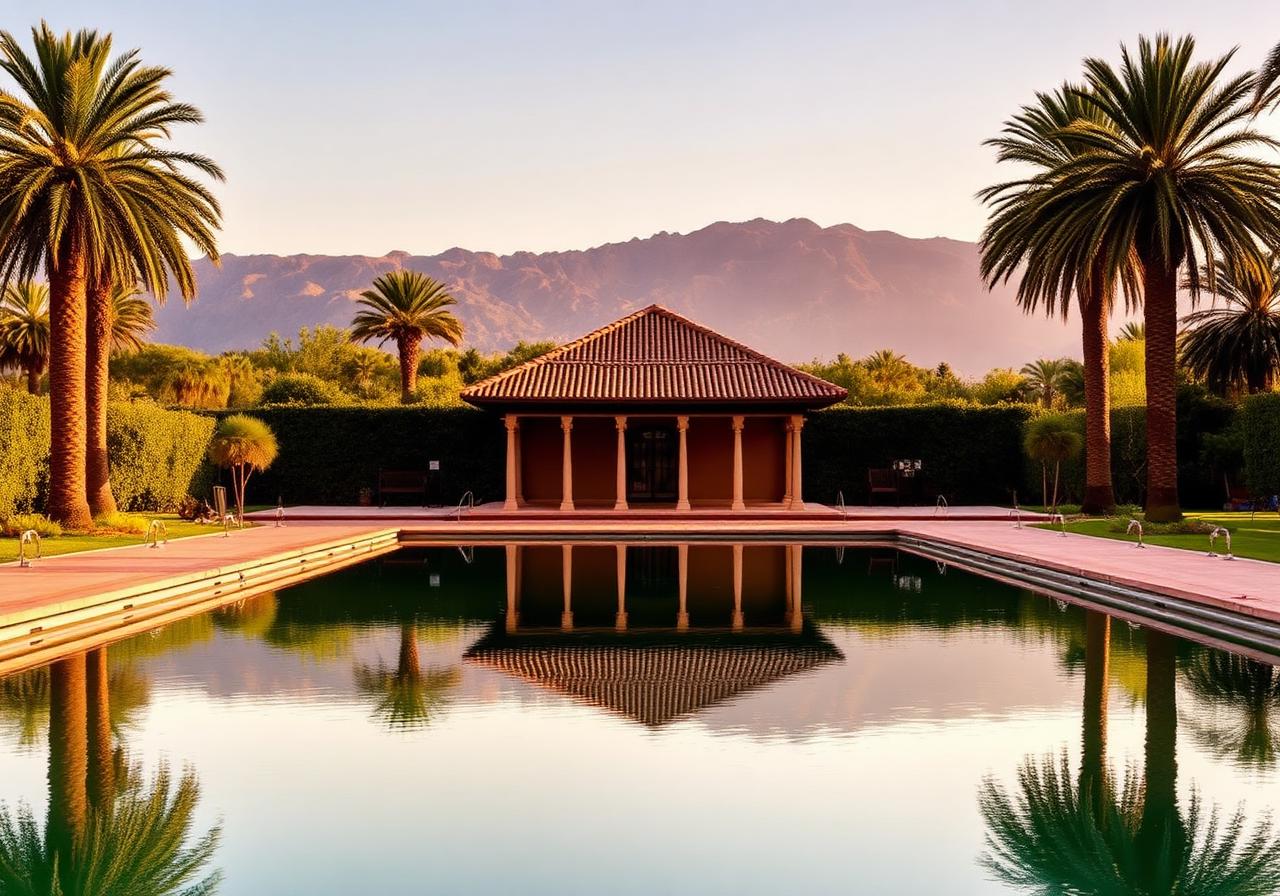
The Jardin Majorelle is one of the best-known green spaces in Marrakech, located in the Guéliz district a few minutes from the medina. It is a private botanical garden built around a villa and a former artist's studio, combining bamboo, cacti, palms and pools in a deliberately dense, shaded atmosphere.
It is important to understand from the outset that this is a complex made up of several distinct entities: the garden itself, the Pierre Bergé Museum of Berber Arts housed in the former studio at the heart of the garden, and the Musée Yves Saint Laurent Marrakech, a separate building located right next door. These do not automatically share the same hours, the same entrance, or the same ticket.
Three places, three experiences
The Jardin Majorelle is the planted outdoor space, with its paths, pools and famous blue-painted villa. The Pierre Bergé Museum of Berber Arts occupies the former painting studio located within the garden itself, so it is reached once you are already inside the green enclosure. The Musée Yves Saint Laurent Marrakech, by contrast, is a separate contemporary building constructed next to the garden but with its own street entrance.
Depending on the period, there may be combined access options for these sites, or strictly separate tickets instead. These combinations, opening hours and any temporary closures change over time and should be checked on the official websites of the Fondation Jardin Majorelle and the Musée Yves Saint Laurent Marrakech before planning a visit.
A painter, then two rescuers
The garden takes its name from the French painter Jacques Majorelle, who created and developed it from the 1920s onward around his villa and studio, gathering plants brought back from his travels. After his death, the site went through a period of decline and faced the threat of urban development.
It was the fashion designer Yves Saint Laurent and his partner Pierre Bergé who bought the property to preserve and restore it, turning it into one of the most carefully maintained gardens in the city. This history explains the presence, right next door, of the museum dedicated to the designer, as well as the strong link between the two sites, even though they remain separate entities in terms of management and visiting.
Vegetation and architecture
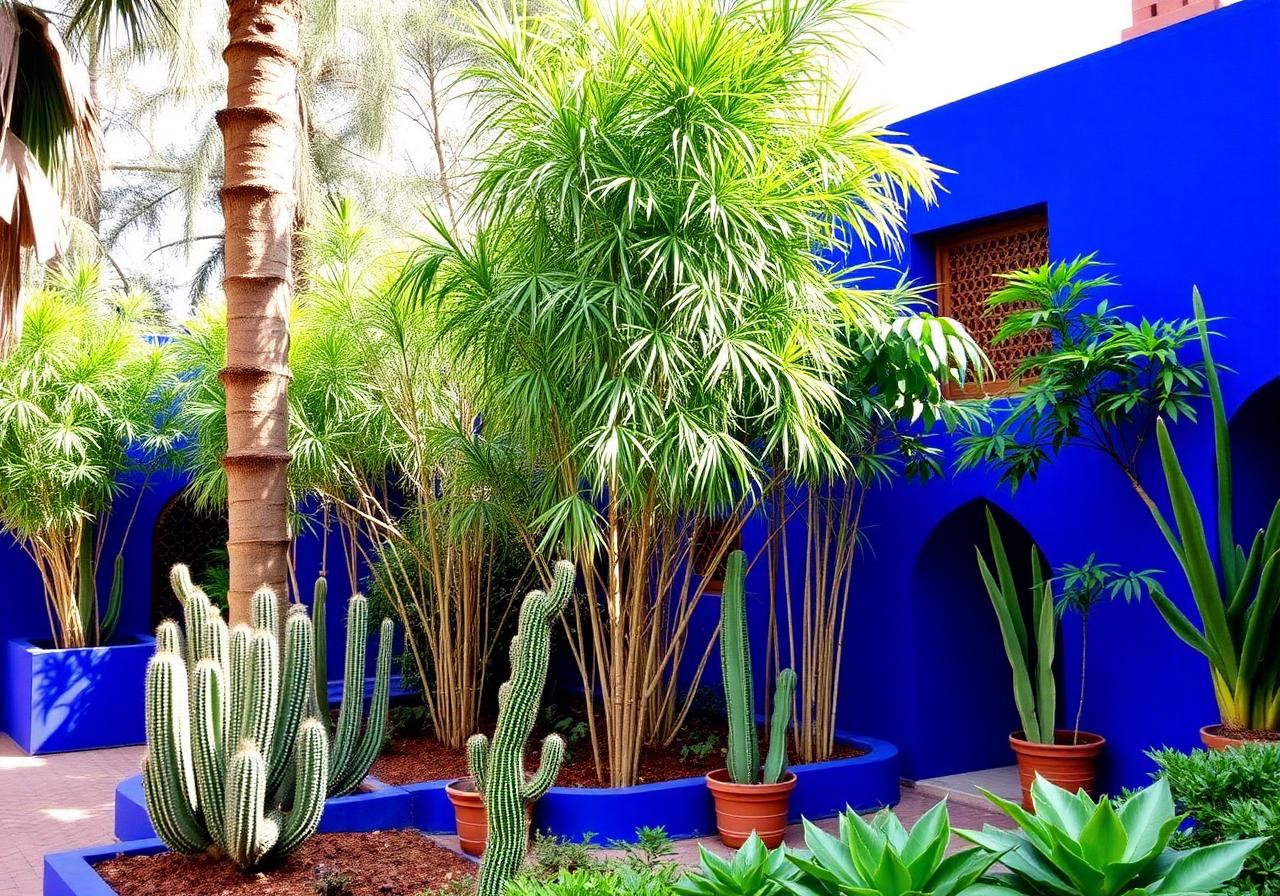
The garden brings together a dense collection of cacti and succulents, bamboo groves that create cool shaded pockets, palm trees, bougainvillea, and several pools where water lilies float. The paths are deliberately narrow and winding, which slows the pace and invites visitors to notice details rather than rush through.
The architecture of the villa and the former studio, with its Art Deco lines and geometric openings, creates a clear contrast with the lush vegetation. It is this interplay between the built structures and the plants, as much as the colour itself, that gives the place its recognisable identity.
Majorelle blue
The vivid shade of blue used on the villa, the plant pots and several garden elements was developed by Jacques Majorelle himself and now bears his name. This intense blue acts as a strong visual anchor in the garden: it stands out clearly against the green foliage and shifts in tone depending on the light, deeper in the morning and brighter around midday.
How much time to allow
- For the garden alone, one to one and a half hours is usually enough to explore it at a relaxed pace.
- Adding the Pierre Bergé Museum of Berber Arts requires extra time to view the displayed collections.
- A visit to the Musée Yves Saint Laurent Marrakech, in the neighbouring building, is generally treated as a separate outing with its own visiting time.
- To combine all three sites in the same morning or afternoon without rushing, it is wise to allow half a day.
Best time for light and calm
The garden is a very busy place, especially around midday. Arriving right at opening time generally allows visitors to enjoy softer light and less crowded paths, which also makes it easier to take photos without too many people in the background.
Opening hours, any dedicated time slots or particularly busy days can vary by season: it is best to check the official website before planning a visit.
Booking, tickets and practicalities
Booking procedures, whether or not online ticketing is available, and the prices for the garden, the Pierre Bergé Museum and the Yves Saint Laurent Museum change regularly and are deliberately not detailed here. The only reliable approach is to check this information directly on the official websites of the Fondation Jardin Majorelle and the Musée Yves Saint Laurent Marrakech before travelling.
How to get there
The garden is located in Guéliz, the new town, at a distance that makes walking from the medina long but doable for those who enjoy walking; many visitors, however, prefer a petit taxi from Jemaa el-Fna or the medina districts, asking the driver to use the meter or agreeing on a price before setting off. From central Guéliz, on the other hand, the garden is easily reachable on foot.
It is worth combining this outing with another stop in Guéliz, such as a stroll along the district's shopping avenues, rather than making a direct there-and-back trip.
Accessibility and visitor comfort
The main paths are passable but some sections remain narrow, with gravel or slight level changes, and quickly become congested at busy times. People with reduced mobility or with a stroller can move through much of the garden, but some tighter passages require patience.
Visiting with children
Children often enjoy the unusual shapes of the cacti, the pools with fish and water lilies, and the garden's bright colours. However, this is not a space designed for running around or playing freely: the paths are narrow, heavily used, and lined with delicate plantings, which means keeping younger children close and attentive.
Crowds and photography etiquette
- Avoid blocking a narrow path to take a photo, especially in front of the most photographed blue pots.
- Be patient if other visitors are waiting their turn at the same spot, since the garden remains a shared and relatively compact space.
- Check whether specific rules on tripods, drones or professional photo shoots apply, as these fall under the site's internal regulations.
What else to see in Guéliz
The Guéliz district, where the garden is located, developed from the protectorate era onward and today concentrates shopping avenues, art galleries, cafés and design shops. It makes a good complement to a morning spent at the garden, offering an atmosphere very different from that of the medina.
Common mistakes
- Assuming that a garden ticket automatically grants access to the Pierre Bergé Museum or the Yves Saint Laurent Museum: these are separate entrances to check case by case.
- Arriving around midday expecting calm, empty paths, when this is often the busiest time.
- Underestimating the walk from the medina and arriving tired before even entering the garden.
Frequently asked questions
Are the garden, the Pierre Bergé Museum and the YSL Museum the same thing?
No. They are three distinct places: the planted garden, the Pierre Bergé Museum of Berber Arts housed in the former studio within the garden, and the Musée Yves Saint Laurent Marrakech, a separate building next door. Their access and hours should be checked independently on the official websites.
Do I need to book in advance?
Booking practices change depending on the period. It is advisable to check the official website of the Fondation Jardin Majorelle and that of the Musée Yves Saint Laurent Marrakech before travelling to find out the current arrangements.
How much time should I allow for the visit?
Allow roughly one to one and a half hours for the garden alone, more if adding the Pierre Bergé Museum, and separate time for the Yves Saint Laurent Museum. Half a day allows combining everything without rushing.
What is the best time to avoid crowds?
Arriving right at opening time is generally the best option to enjoy soft light and less crowded paths, as midday is often the busiest period.
How do I get to the garden from the medina?
On foot, the walk is long but doable; most visitors take a petit taxi, asking for the meter or agreeing a price before departure. From central Guéliz, the garden is easily reachable on foot.
Is the garden suitable for children?
Children often enjoy the cacti and pools, but this is not a space for running freely: the paths are narrow and busy, and the delicate plantings require attentiveness.
Is the garden accessible for people with reduced mobility?
A good part of the paths are passable, but some sections remain narrow with gravel or slight level changes, and become congested at busy times.
Read next
Sources and verification
Discover Marrakech is not an official site. Opening hours, prices, closures and access conditions should be checked with official sources before you travel. Recommendations reflect our own experience, separate from verifiable facts.
- Fondation Jardin Majorelle - site officiel
- Musée Yves Saint Laurent Marrakech - site officiel
- Office National Marocain du Tourisme
- Conseil régional du tourisme de Marrakech-Safi
Last editorial review: August 2026
Estimated duration · About 75 seconds
I cannot confirm the exact price or opening hours here. Please check the official page or Google Maps before visiting.