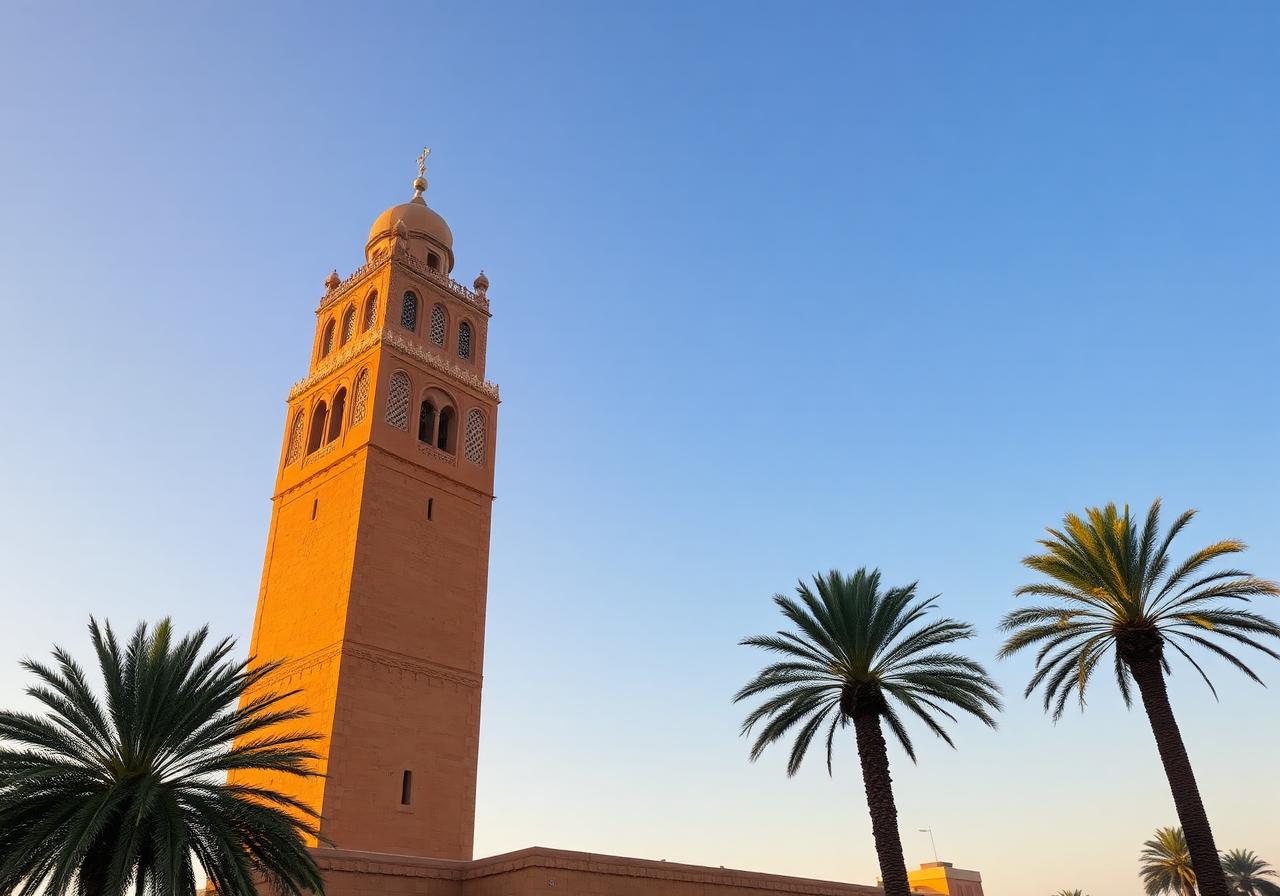
Visible from almost every corner of the medina, the Koutoubia's minaret is Marrakech's vertical landmark. Built in the 12th century under the Almohad dynasty, the mosque surrounding it remains an active place of worship, and its minaret continues to be one of the city's most photographed monuments.
This page covers what can realistically be seen and done around the Koutoubia, its historical and architectural significance, and the access rules that apply in Morocco to active mosques — always worth confirming with official sources before your visit.
A foundational Almohad mosque
The Koutoubia Mosque was built during the Almohad era, a Berber dynasty that ruled the Maghreb and part of the Iberian Peninsula in the 12th century. Its name is thought to derive from the booksellers' souk (kutubiyyin) that once stood nearby. It is regarded as one of the most significant achievements of Almohad architecture, alongside other major religious monuments of the period.
The minaret and its architectural influence
The Koutoubia's minaret, roughly 77 metres tall according to historical sources, is built of stone and brick and decorated with geometric motifs and ceramics. Its style is often mentioned alongside other Almohad minarets, notably the Giralda in Seville and the Hassan Tower in Rabat, built in the same period and sharing similar proportional principles. It is worth being cautious, though: the exact architectural relationship between these monuments is debated among historians, and specialised sources are the best place to explore the topic further.
What can be seen today
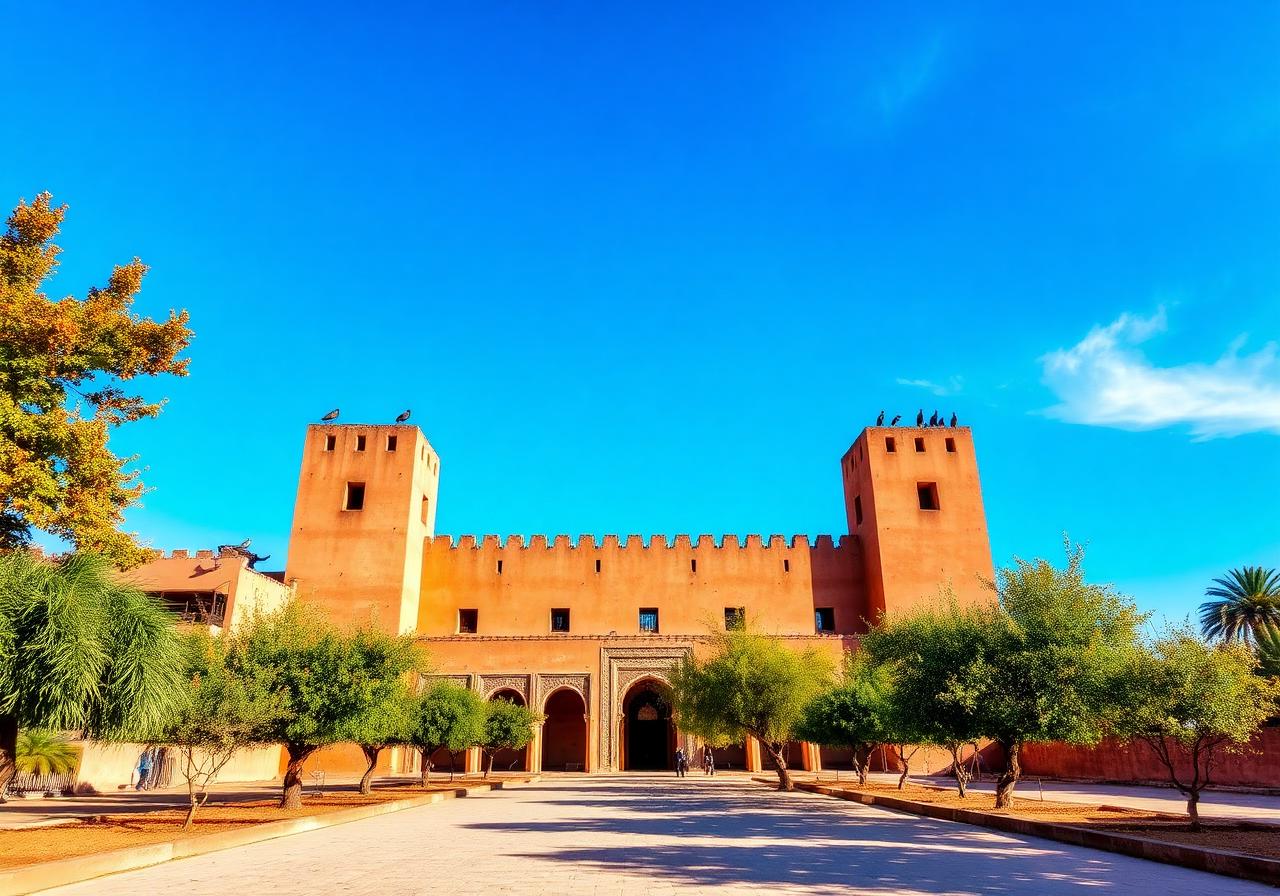
The mosque remains an active place of worship. The vast majority of visitors experience the Koutoubia from the outside: the minaret, the building's overall silhouette, the surrounding gardens and the esplanade where locals and travellers mingle. These freely accessible public spaces make up the core of the visit for most people.
Access to the prayer hall: a rule to respect
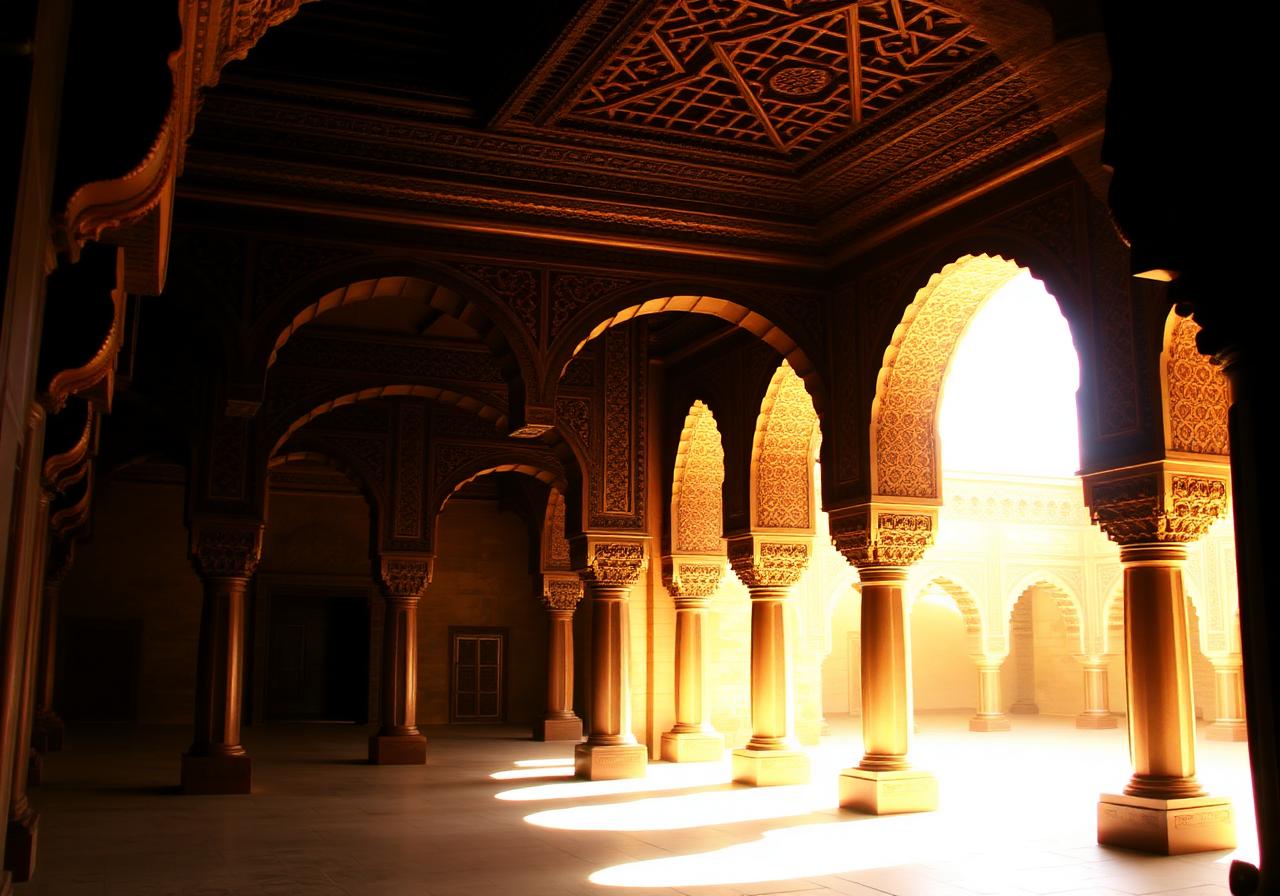
In Morocco, entry to the prayer hall of active mosques is generally reserved for Muslims. This applies to the Koutoubia as it does to most mosques in the country. It should be understood as a matter of respect for the place of worship, not a tourist restriction. If you would like to know the exact rules or any possible exceptions, check directly with local authorities or tourist offices before your visit.
The gardens, esplanade and older ruins
- The Koutoubia gardens, planted with orange trees, palms and rose bushes, offer a shaded walk around the monument.
- The esplanade in front of the mosque is a place of passage and gathering, used by both residents and visitors.
- Remains of an earlier mosque, built before the current Koutoubia, are visible nearby and bear witness to the site's different construction phases.
- These outdoor areas can be visited freely, at any time of day, without a ticket.
Best times and angles for photos
The minaret is especially photogenic early in the morning or late afternoon, when raking light highlights its carved reliefs. Many visitors enjoy the view from the gardens at its base, as well as from the esplanade along Avenue Mohammed V. The perspective also changes depending on whether you approach from Jemaa el-Fna or from the more distant Menara gardens.
A short walk from Jemaa el-Fna
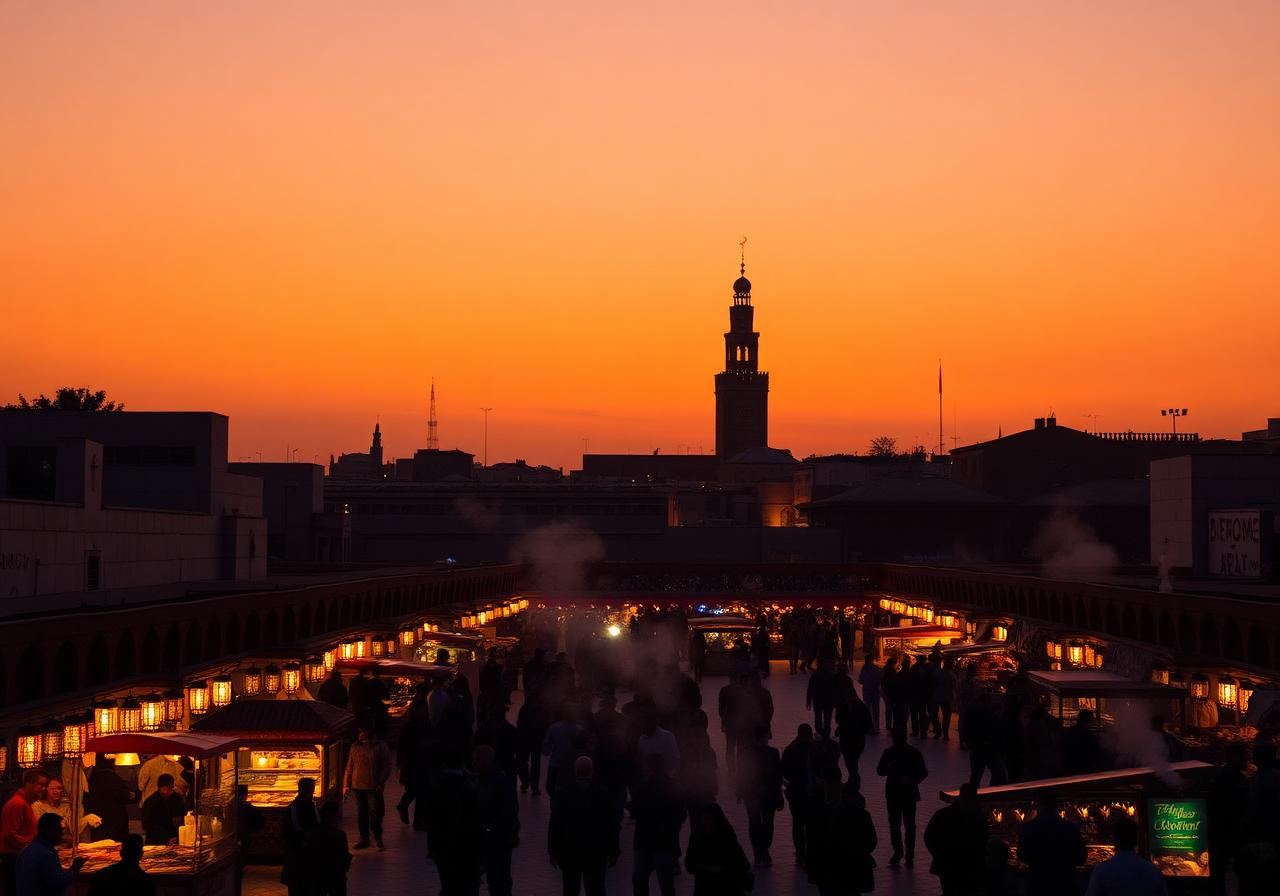
The Koutoubia is a short walk from Jemaa el-Fna square, making it a natural stop before or after exploring the square and the surrounding souks. Walking between the two sites reveals the contrast between the square's bustle and the relative calm of the mosque gardens.
How much time to allow
Allow roughly 20 to 40 minutes to admire the minaret, stroll through the gardens and walk around the esplanade. This fits easily into an itinerary combining Jemaa el-Fna square, the souks, or a walk towards other monuments in the medina.
Outdoor accessibility
- The garden paths and the esplanade are generally flat, making it easier for strollers or wheelchairs to move around.
- Benches are placed throughout the gardens, useful for a break in the shade of the trees.
- Shade is available in places thanks to the trees, but the esplanade itself remains largely exposed to the sun: bring sun protection for daytime visits.
Visiting with children
The gardens and esplanade make for a pleasant space for families: children can run around, watch birds or simply stretch their legs after walking through the medina. As this is a place of worship, it's advisable to keep a calm and respectful demeanour in the immediate vicinity of the building.
What to see nearby
- Jemaa el-Fna square and the entrance to the souks, a few minutes on foot.
- Majorelle Garden, a little further away, reachable by taxi or on foot depending on available time.
- Menara Gardens, further from the centre, for a contrast with the Koutoubia's urban setting.
Common mistakes
- Assuming you can enter the prayer hall without checking current rules: this is worth confirming on site or with an official source.
- Underestimating sun exposure on the esplanade around midday.
- Standing in front of the entrance reserved for worshippers to take photos, which can hinder access for people coming to pray.
Practical tips and etiquette
- Wear clothing that covers shoulders and knees, especially in the immediate vicinity of the monument.
- Avoid photographing people who are praying or in quiet reflection without their consent.
- The times of the five daily prayers punctuate the day: a particular calm can be noticed around the mosque during these moments.
- To combine your visit with the nearby square, the guides on the stress-free medina and on enjoying Jemaa el-Fna offer useful pointers.
Frequently asked questions
Can you enter the Koutoubia Mosque?
Access to the prayer hall of active mosques in Morocco is generally reserved for Muslims. This applies to the Koutoubia. Always check the precise details with an official source before your visit.
What can you see without entering the mosque?
The minaret, the surrounding gardens, the esplanade and the remains of an earlier mosque are freely accessible and make up most of what visitors experience.
How much time should I plan for the visit?
Around 20 to 40 minutes is enough to admire the minaret and stroll through the gardens and esplanade.
Is the Koutoubia close to Jemaa el-Fna?
Yes, it is a short walk from the square, making it easy to combine both visits.
Do you need a ticket to see the Koutoubia?
The gardens and esplanade can be visited freely, without a ticket. For information on any special access arrangements, check with an official source.
How should I dress to visit around the mosque?
Clothing that covers shoulders and knees is recommended, especially in the immediate vicinity of the monument. The guide on respectful dress in Marrakech gives more detail on this.
Can you take photos around the Koutoubia?
Yes, photography is common in the gardens and on the esplanade. However, avoid photographing people who are praying without their consent, and respect the spaces reserved for worshippers.
Read next
Sources and verification
Discover Marrakech is not an official site. Opening hours, prices, closures and access conditions should be checked with official sources before you travel. Recommendations reflect our own experience, separate from verifiable facts.
- UNESCO – Medina of Marrakesh (World Heritage)
- Office National Marocain du Tourisme (ONMT)
- Ministère des Habous et des Affaires Islamiques
- Encyclopædia Britannica – Almohad dynasty
Last editorial review: August 2026
Estimated duration · About 60 seconds
I cannot confirm the exact price or opening hours here. Please check the official page or Google Maps before visiting.