The Ourika valley cuts into the High Atlas south of Marrakech, following the river of the same name up to the village of Setti Fatma, the starting point for a chain of waterfalls. It is the most accessible mountain excursion from the city, valued for cooler air, terraced green fields and a change of pace from the medina.
This guide explains concretely what the day looks like, how far you can go on foot without particular effort, where it turns into a real scramble over rocks, and which kind of traveller this trip genuinely suits.
What the valley is, and how it differs from Marrakech
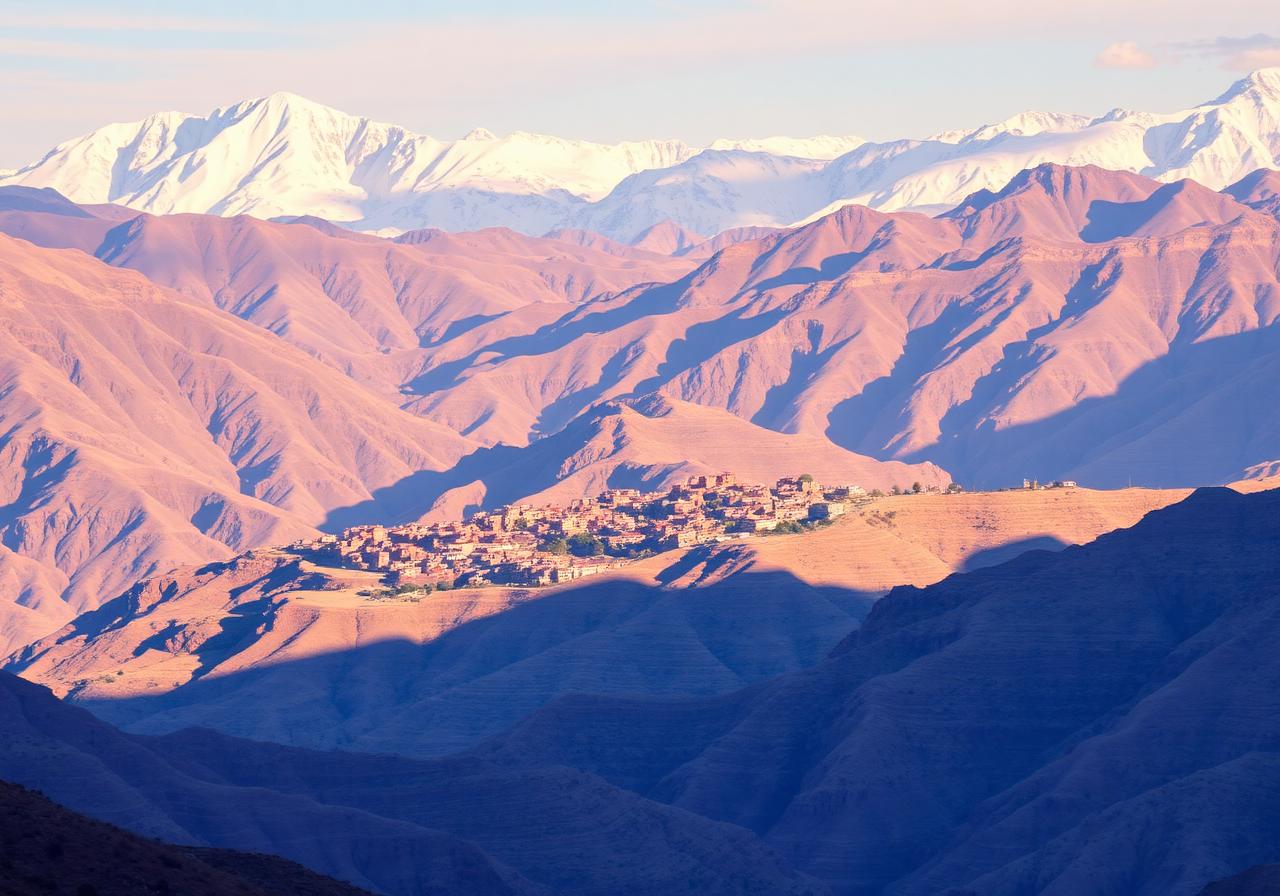
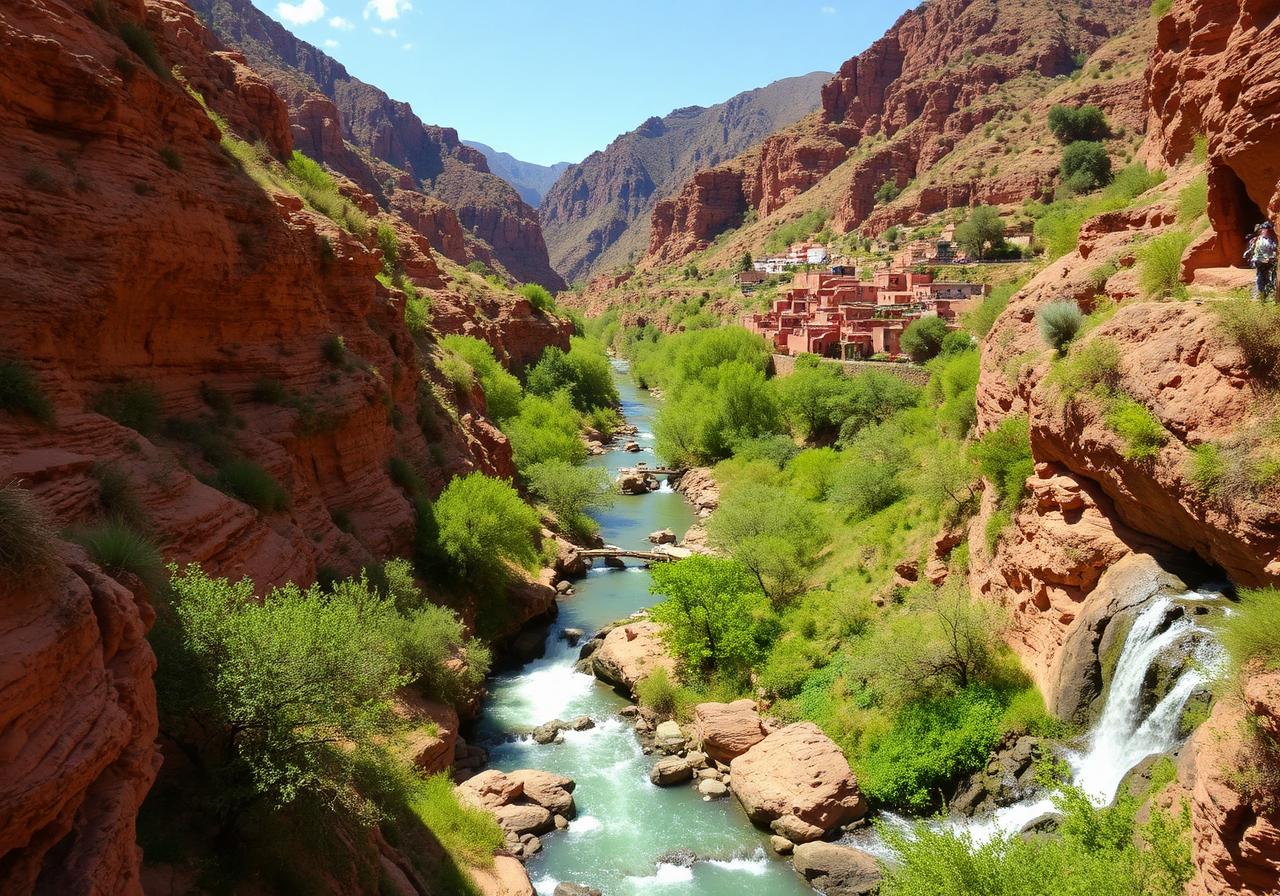
Ourika is not a single site but an inhabited farming valley, with Amazigh hamlets, terraced fields, orchards and a river flowing down from the High Atlas. The landscape gets progressively greener and hillier as the road climbs, up to Setti Fatma, which marks the end of the drivable road and the start of the walk.
The contrast with Marrakech is mostly felt in temperature, cooler at altitude, and in pace: less traffic, more open space, and tourism concentrated around day visits rather than the kind of hotel infrastructure found in the medina.
What the day actually consists of
The drive follows the road up the valley, with possible stops along the way near cooperatives or viewpoints over the cultivated terraces. Once in Setti Fatma, you walk along the river and through the village with its riverside cafés, before setting off on foot up the trail leading to the waterfalls.
The exact programme (stops, time on site, a possible lunch) depends on the operator if the trip is booked as a group or private tour; check this when booking.
Setti Fatma, the village at the end of the road
Setti Fatma is an Amazigh village built around the river, with café terraces set on wooden platforms right over the water. It is also the required starting point for reaching the waterfalls, and where informal guide offers are concentrated.
The waterfalls: real difficulty, from the first to the higher ones
People generally speak of a chain of seven waterfalls. Reaching the first one from Setti Fatma is a short walk manageable by most reasonably fit people. Continuing to the next ones is a different matter entirely: it involves scrambling over rock blocks, often wet and slippery, with no engineered path or handrail, sometimes requiring the use of your hands.
Hiking apps commonly rate this route as moderate, but how it actually feels depends a lot on the state of the rocks that day and the water level. It is not a stroll in flip-flops, even though the start of the path might suggest otherwise.
Footwear and conditions to expect
- Closed shoes with good grip (hiking-trainer type) are needed as soon as you go beyond the first waterfall; sandals, flip-flops or smooth-soled shoes are not suitable on wet rocks.
- The rocks around the water are frequently damp and therefore slippery, even in otherwise dry weather elsewhere in the valley.
- Bring clothes that dry easily and something to protect a camera or phone from splashes.
Limited mobility, small children, fear of heights: what to expect
The section up to the first waterfall is manageable for most accompanied children and adults without particular mobility issues, though it is not a flat or paved path. Beyond that, the rock scramble is not suitable for people with limited mobility, unsupervised young children, or anyone uneasy with heights or balance, since there is no handrail or barrier.
For those who prefer to stay lower down, the riverside cafés in Setti Fatma offer a pleasant alternative to enjoy the atmosphere and the cool air without doing the climb.
Guide offers: common practice, not an obligation
In Setti Fatma, it is common for local men to spontaneously offer to guide visitors to the upper waterfalls. This is a common, local practice, but there is no indication it is an official or regulated status, and no known fixed rate: it is best to clearly agree, before setting off, on what the guiding includes and the price asked, and to feel free to politely decline if you would rather walk alone or stop at the first waterfall.
Seasons and weather
In spring, the valley is especially green and the river and waterfalls generally run stronger. In summer, the relative coolness at altitude makes it a welcome escape from Marrakech's heat. In winter it is cooler and wetter, and the higher ground can get snow. In any case, as in any mountain area, rain can arrive suddenly and raise water levels quickly: it is best to stay cautious and ask about the day's conditions before setting out on the trail.
How long to plan for
Half a day is enough to reach the first waterfall, enjoy a riverside terrace and make the return trip to Marrakech. Allow a full day if you want to climb beyond the first waterfall, take your time there, and include possible stops along the way. These durations are approximate and depend on traffic and the group's pace.
Who it is worth it for, and who should choose something else
Ourika suits people who want an accessible one-day nature outing, with some walking, an authentic rural setting and a change from the medina, without organising a mountain expedition. On the other hand, those looking for polished tourist infrastructure, real wilderness solitude away from other visitors, or a trip with no physical effort at all will probably be better served by a different excursion.
Frequently asked questions
Is the Ourika valley really worth the trip?
Yes, for an easy green break to organise from Marrakech, with some walking and a genuine change of scenery, as long as you accept it is neither an isolated wilderness nor a manicured park.
Is the walk to the waterfalls hard?
Up to the first waterfall, no: it is a short, accessible walk. Beyond that, yes, it becomes a genuine scramble over rocks that are sometimes slippery, with no engineered path.
Do I need a local guide?
It is not required up to the first waterfall. Beyond that, local guiding can be useful, but it is an informal practice: agree on it clearly before setting off, and feel free to decline if you would rather stop earlier.
What shoes should I wear?
Closed shoes with good grip, hiking-trainer style. Sandals or flip-flops are not enough once you leave the first waterfall, because of the wet rocks.
What is the best season to go?
Spring offers the greenest scenery and stronger water flow; summer is valued for its relative coolness compared with Marrakech's heat; winter is cooler and wetter, with occasional snow higher up. Check the day's weather before setting out, since mountain rain can raise water levels quickly.
Ourika or other Atlas villages: which to choose?
Ourika is quicker and centred on the river and waterfalls; other Atlas valleys offer more high-altitude hiking or a more isolated feel, often at the cost of a longer drive. The choice depends on time available and whether you prefer walking or relaxing by the water.
Sources and verification
Discover Marrakech is not an official site. Opening hours, prices, closures and access conditions should be checked with official sources before you travel. Recommendations reflect our own experience, separate from verifiable facts.
- Office National Marocain du Tourisme (ONMT) — Visit Morocco
- Conseil Régional du Tourisme de Marrakech (CRT Marrakech)
Content reviewed in September 2026; variable information (access, trail conditions, any guiding fees) should be reconfirmed before you travel.
Estimated duration · About 60 seconds
I cannot confirm the exact price or opening hours here. Please check the official page or Google Maps before visiting.